


A trusted knitwear manufacturer
A trusted knitwear manufacturer empowering your brand expansion.
Start your brandjourney today.

Sat 09 , 2026

French terry and fleece are two of the most popular knit fabrics used in custom hoodies and sweatshirts, but they are built differently and perform differently. French terry uses a smooth knit face with tiny loops on the inside, which keeps the fabric breathable and lightweight. Fleece is usually brushed on one or both sides to raise a soft pile, which traps more air and adds warmth. The choice between the two comes down to your target climate, season, hand feel, and the look you want for your brand.
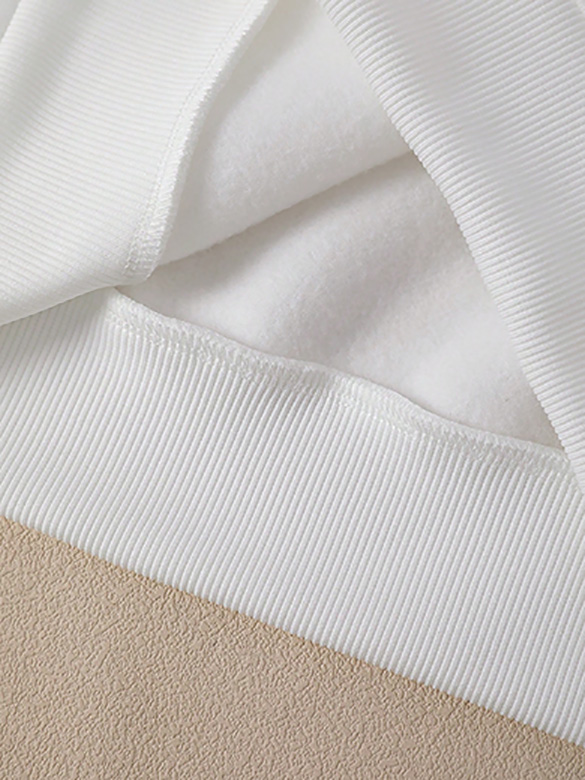
French terry is a weft-knit fabric, usually made from cotton, polyester, or a cotton-poly blend. One side has a flat, smooth knit surface. The other side is covered in small loops, which is why the inside of a french terry hoodie feels soft and slightly textured against the skin.
Because the loops are not brushed, french terry stays breathable, absorbs moisture, and keeps the garment lighter in weight. It is a common material for year-round hoodies, lightweight sweatshirts, joggers, Loungewear Sets, and casual pullovers. At Sharon, french terry is one of our core fabrics for custom hoodies and is sourced from our own fabric mill to keep development flexible.
Fleece is usually knit from polyester, cotton, or cotton-poly blends and then brushed on one or both sides. Brushing pulls the surface fibers up into a short pile, which traps body heat and creates the soft, fuzzy hand feel that most people associate with a winter sweatshirt.
Because fleece is brushed and denser, it is warmer and heavier than french terry at the same weight. It is the typical fabric choice for fall and winter hoodies, heavy sweatshirts, and outer-layer pullovers. For brands targeting cold climates or selling heavier "premium" sweatshirts, fleece is usually the default pick.
Both fabrics can look similar on the outside, especially on a finished hoodie. The real differences show up in weight, breathability, warmth, and how the fabric behaves over time. The table below summarizes how french terry and fleece compare for custom hoodie production:
| Property | French Terry | Fleece |
|---|---|---|
| Inside surface | Small knit loops, smooth feel | Brushed pile, fuzzy feel |
| Weight | Lighter, typically 180–280 gsm | Heavier, typically 280–420 gsm |
| Warmth | Light to medium warmth | Medium to high warmth |
| Breathability | Higher, loops allow air flow | Lower, brushed pile traps heat |
| Best season | Spring, summer, light layering | Fall, winter, cold climates |
| Typical use | Lightweight hoodies, joggers, loungewear | Heavy hoodies, sweatshirts, outerwear |
| Print and embroidery | Clean surface, prints sit flat | Pile texture, prints may look softer |
Durability is one of the first things B2B buyers ask about when comparing french terry vs fleece for hoodies. Both fabrics are knit-based and perform well in daily wear, but they age differently.
French terry tends to hold its shape well over time because the unbrushed loop side does not break down as quickly. Pilling is less of an issue with good-quality cotton or cotton-poly french terry. The smooth face also keeps prints and embroidery looking crisp after many washes, which matters for branded hoodies.
Fleece feels thicker and more protective at first, but the brushed pile can pill, thin out, or lose softness if the fabric quality is low. Higher-gsm fleece with tighter knitting and anti-pill finishing performs much better, which is one reason buyers sourcing for premium or private label lines should confirm the mill's anti-pill treatment before placing a bulk order.
For brands that need consistent quality across reorders, ask the manufacturer for the fabric source, finishing process, and a wash-test report. Sharon sources fleece and french terry from our own fabric mill and can coordinate anti-pill, preshrunk, and custom dye finishes for bulk production.
The answer depends on what your customer expects. A 100% cotton french terry pullover is a great match if you are selling lightweight year-round hoodies, spring collections, or active loungewear. The fabric drapes cleanly, breathes well in warmer weather, and gives a clean surface for screen printing, digital printing, or embroidery.
Fleece is the better match if your collection is positioned for fall and winter, your customers live in cold climates, or you want the heavy "premium sweatshirt" feel that has been trending in streetwear and boutique fashion. Brushed fleece also photographs well and is often used for oversized hoodies and heavier pullovers.
Many brands choose both. A typical setup is french terry for spring/summer drops and fleece for fall/winter drops. Since Sharon operates its own fabric mill and runs both fabric types on the same production lines, we can help you plan a year-round fabric strategy within one development cycle.
Buyers often ask what "non-fleece sweatpants" means, since they see both french terry and fleece used for joggers and pull-on pants. The distinction is the same as for hoodies. French terry sweatpants are lighter, more breathable, and better for indoor wear, gym wear, or warm weather. Fleece sweatpants are warmer and more comfortable for cold weather lounging.
If your brand sells matching Sets, the same fabric choice usually applies to both pieces. We produce custom french terry and fleece joggers alongside hoodies, so color, weight, and finishing can be matched across the set without extra sampling.
A practical way to lock in the right fabric for your first hoodie collection is to walk through the following points with your manufacturer before sampling:
Target season and climate — french terry for spring/summer and layering; fleece for fall/winter and cold regions.
Garment weight target — under 280 gsm usually means french terry; 280 gsm and above usually means fleece.
Hand feel preference — smooth inside for a clean, lightweight feel; brushed inside for a soft, warm feel.
Print and decoration method — clean knit face for sharp screen prints and embroidery; fleece pile works better for puff, high-density, or vintage-effect prints.
Production budget and MOQ — both fabrics support low MOQ trial orders at Sharon; final pricing depends on fiber content (cotton, poly, or blend) and finishing.
Quality and compliance — confirm anti-pill finishing, preshrunk treatment, and any fabric certifications required by your market.
Sharing these points with the manufacturer during sample development helps avoid unnecessary re-samples and keeps the project moving from fabric selection to bulk production smoothly.
French terry and fleece are both reliable choices for custom hoodies and sweatshirts, but they serve different seasons and customer expectations. French terry is lighter, more breathable, and works for layered or year-round wear. Fleece is warmer, heavier, and works for cold weather or premium streetwear. The right fabric depends on your target season, your hand feel preference, and the print or decoration method you plan to use.
Sharon produces both french terry and fleece hoodies, sweatshirts, and joggers from our own fabric mill, with low MOQ trial orders and full OEM/ODM support. Send us your fabric weight, color, and quantity requirements and our team will reply within 24 hours with a development plan and a quote.
We attach great importance to the customers' demands for product quality and rapid production.
We always believe that meeting the customers' needs is the realization of our value!

Tel:+61 414 284 868
E-mail: sharon.apparelco@gmail.com
Address:Room 101, No. 49, Chonghuan East Road, Shijie Town, Dongguan City, Guangdong Province
Copyright © 2026 Dongguan Sharon Garment Co., Ltd. All rights reserved.
Privacy Policy / Cookie Policy / Terms & Conditions